
Introduction »

To list the entire history of the Jukebox and its fascinating world would be a never-ending task for even the most fanatical of admirers. The craze for this unique music machine travels back over a century and its popularity is on the increase with the current trend for retro and kitsch.
Although the history of the Jukebox extends back more than one hundred years, they hit the peak of their fame in the 1940’s and 1950’s. The jukebox was an essential feature of bars and diners across the United States and over Europe. Their beautifully sculpted appearance and their unique, rich sound added style, entertainment and a talking piece for any venue!
So how did it all begin? »
It is unclear as to where the term ‘jukebox’ actually originated from. Rumour has it that the term was derived from the black slang for dancing: ‘jook’. This is also a slang word for sex: a somewhat vague link between music and the art of seduction. Finally, it could be a deviant of the word ‘jute’, referring to jute joints; venues for jute picking labourers to dance and socialise.
Coin operated music was a phenomenon of the late 1800’s and very early 1900’s. The first record players were soon to follow in the first decade of the twentieth century, developed by the John Gabel Company. The machine had to be wound up and the sound came from a horn. It was not until the late 1920’s with the arrival of electronically recorded and played records that the Jukebox we know and love began its journey.

Social Influences »
It can be argued that jukeboxes became well known alongside the all-American diner. The beginning of the 1930’s saw American diners in the latest materials, boasting formica tables, chrome, leather and neon signs.
It is hard to disagree that the look of jukeboxes with their chrome and their coloured and animated lighting slotted in perfectly to the diner ‘look’. Visitors to diners naturally wanted a bit of entertainment and music but live bands proved too expensive. Instead the diners donned jukes, providing their customers with great entertainment, whilst providing themselves extra cash from the nickels, dimes and quarters dropped in the slot.
The success of the jukebox could be attributed to the American designs and styling; maybe a product of their love of gadgetry for convenience and entertainment such as slot and vending machines. AMI, Seeburg, Mills and Capehart were the earliest developers of the jukebox. It was Homer Capehart that was later influential in the design and development of the Wurlitzer, despite Mills having the longest background in the production of coin operated entertainment.
Technology »
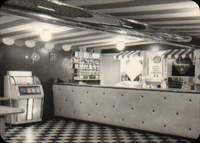
In the 1930’s the jukebox was housed in a finely carved walnut cabinet. These were beautiful but also heavy and somewhat expensive to work with. When modernism swept the country in the 1940’s, the glass was replaced by pristine plastic and the ‘light up’ cabinets that epitomises the jukebox appeared on the scene. The late 1930’s and early 1940’s saw an influx of light and decoration for the jukebox. However, things were set to change. In the 1950’s jukebox modernisation was more minimalist.
Many jukeboxes throughout the 1940’s played their music not through the machine, but through speakers that were either wall mounted or placed on counter tops. Rock-Ola and Seeburg were the first of the jukebox manufacturers to create the wall box systems that would be used in conjunction with the console jukebox. Modernism and new technology in the 1950’s allowed this to change with integral speakers, to the monophonic, and later, the stereophonic quality that we enjoy today.
Teenage Rebel »
The jukebox wasn’t always popular. In fact, it was quite the opposite.
The poor public image of arcades and sleazy bars stained people’s opinion of the jukebox due to the fact that it was also coin operated. This image was changed not only by extensive advertising campaigns, but also over time as society changed and the jukeboxes improved.
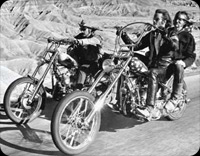
The popularity of the jukebox was threatened again in the late 1940’s. The invention of the television had a lot to answer for as it not only kept people entertained at home but also appeared in bars and diners where the jukebox had once taken pride of place. Despite difficult times, the jukebox held on, clinging to the hearts of those that appreciated it, and eventually reinstated its popularity with the birth of rock and roll in the 50’s and 60’s. Youths flocked to bars for dancing and socialising, whilst their parents sat at home watching that oh so popular television!
Style and Development »

The visual appearance of the jukebox has undoubtedly changed over time. The build-up to America’s involvement in the Second World War saw an influx of demand and a passion for jukebox glamour. The bubble tube had just become popular and remains a well-known feature of the Wurlitzer, although they weren’t the only company to use them. Inevitably fashion, technology and changes in the music trend has had its effect on jukeboxes and we have seen them move from heavy walnut; to coloured plastic; to coloured glass and shiny chrome.
However, one thing will always remain the same. The jukebox is an irreplaceable, musical piece of art. Whether it is loved by a niche of fanatics or by everyone, the jukebox always will be loved.
© Lauren G Dudley, BA Hons – Jukebox Collector & Journalist